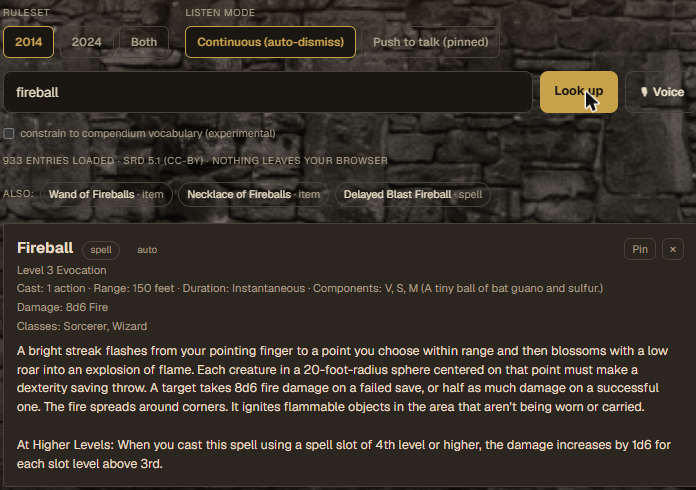
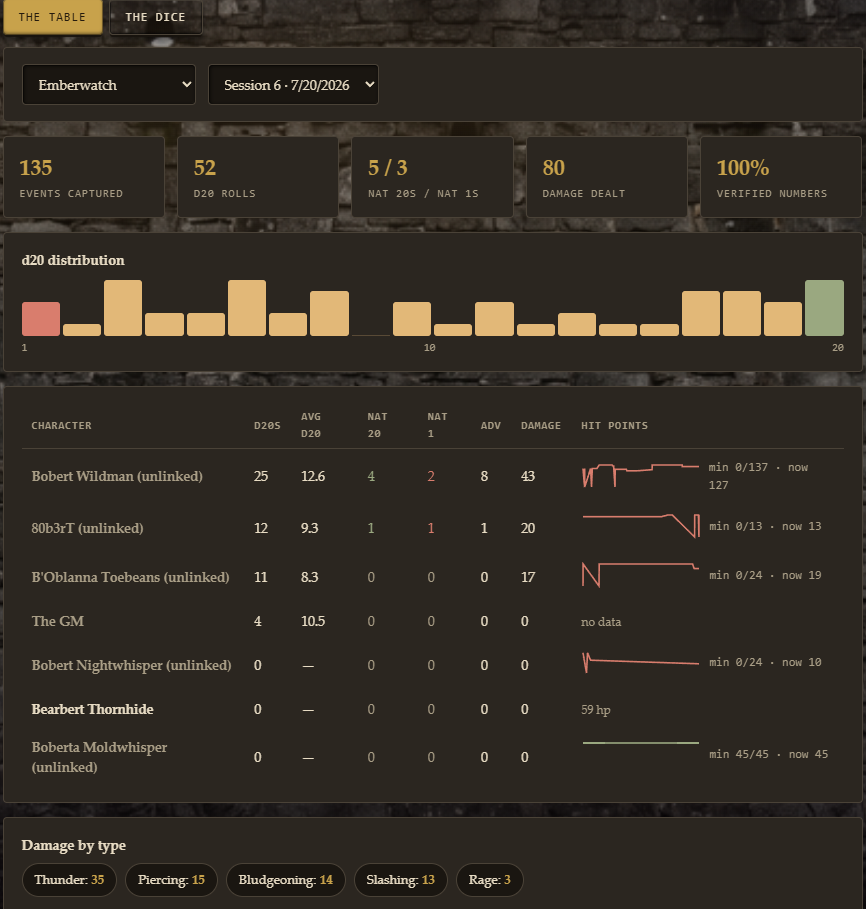
Every session tool transcribes and summarises. Six Axes also captures the mechanics: attacks, saves, damage, hit points, who rolled what and when. On a supported virtual tabletop the numbers arrive automatically; in person, it reads the rolls your table says out loud.
That turns into arithmetic nobody else can do. It knows the fight it called Moderate left the party at a third of their hit points, and it can tell you your Moderate encounters land like Hard ones, at your table, across a whole campaign, with its own uncertainty shown so a thin read reads as thin.
The living wiki
A campaign wiki that writes itself
The bible you were never going to keep by hand.
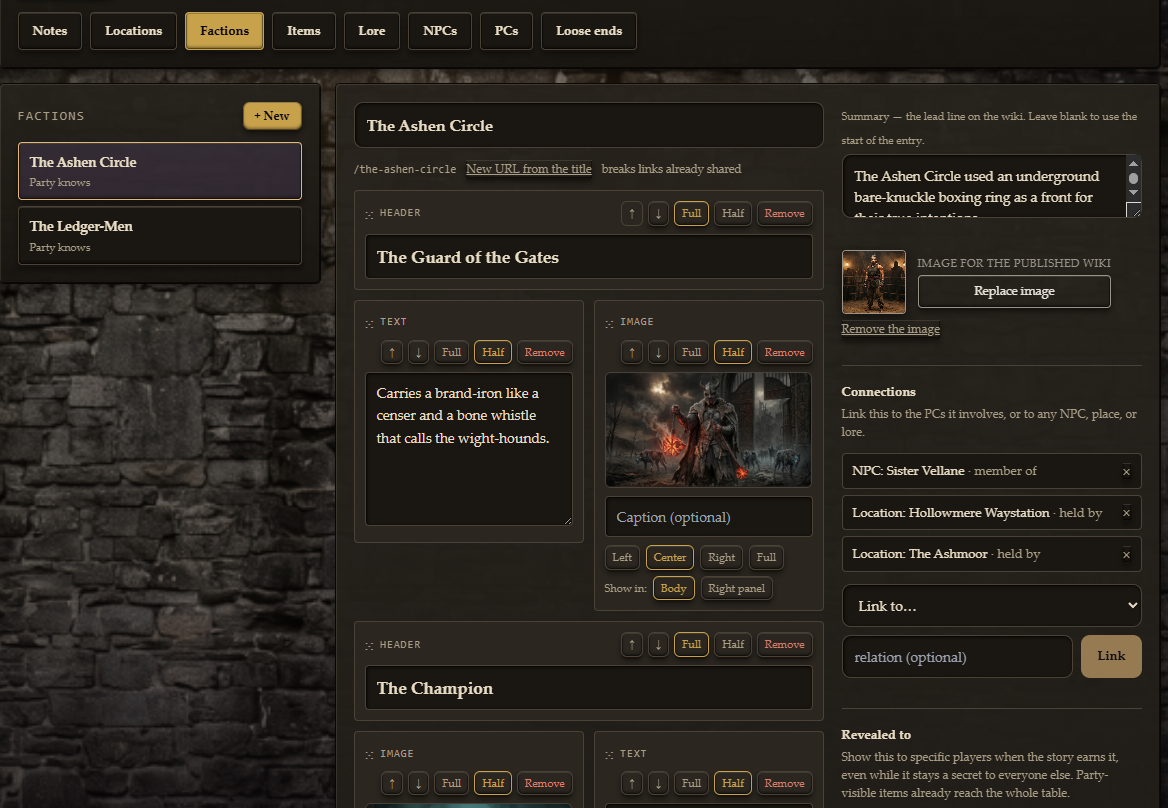
Every NPC, place, faction, thread, and piece of loot is captured from what was narrated and filed where you can find it. You approve what goes in. By session five you have a campaign bible without having written one.
Publish it as a page anyone can read, no account needed, and choose exactly what appears, so the setting and the cast can go public while the secrets your players have not found yet stay yours.
Player insight
How your table is actually doing
In plain language, across six axes.
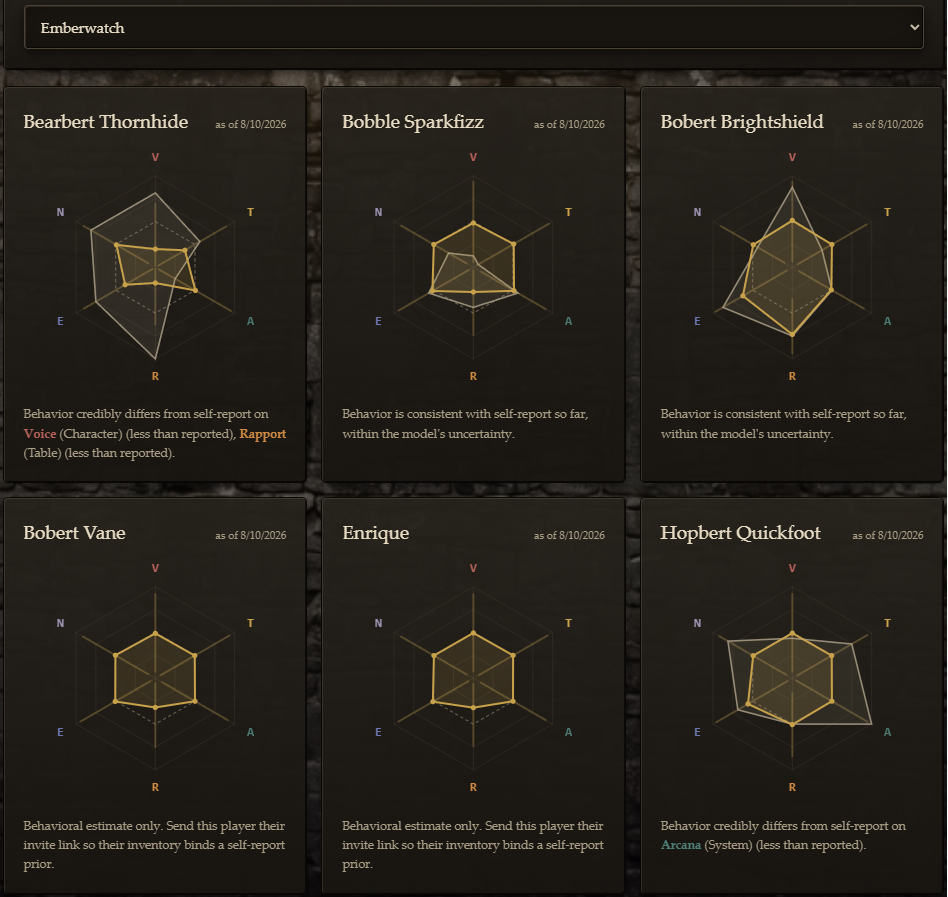
Which threads have gone stale, who has not had a scene in a while, that one character quietly holding two thirds of the loot, the things you half-notice on the night and forget by the next.
And a read of how each player engages across six axes, tactics, arcana, voice, exploration, rapport, and nerve, comparing what they say they like against how they actually play. It is not a score and no axis is the good one; it is there so you can give someone the scene they would love.
Built for your system
One core, a module per game
It reskins and re-rules itself around your table.
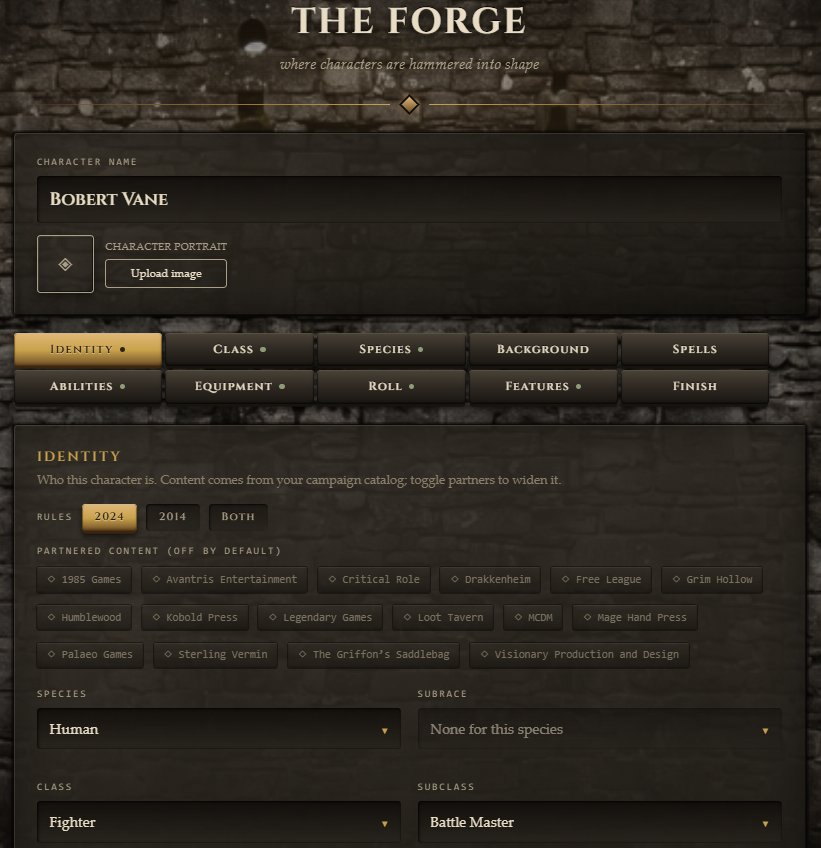
D&D 5e, Pathfinder 2e, Draw Steel, and Daggerheart get the full toolset: a character builder, monsters or NPCs, encounter maths, and system-correct dice. Call of Cthulhu, Lancer, and a generic d10 pool run as a themed table with the right roller, with more on the way.
The record, recap, wiki, and player insight work the same on every system. What changes is the dice and the sheet, not the loop.
World & maps
Build the world, four scales deep
World, city, dungeon, and building.
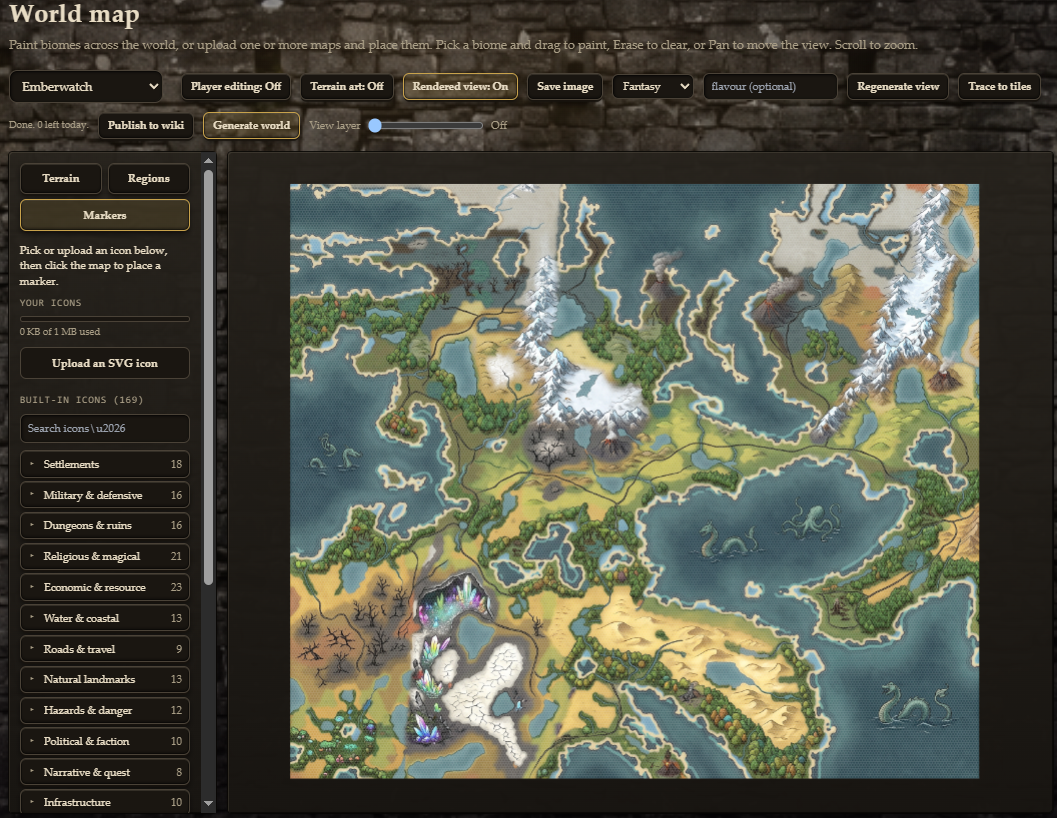
Generate a hex world from a seed or paint biomes by hand up to 250 by 250, then have it rendered as a finished map. Drop pins linked to places and NPCs, trace where a session went, and build city, dungeon, and building maps with the same brush-and-render loop.
A slice of all of this is free with no login: the encounter balancer, dice roller, map generator, and more. The free tools are the front door to everything above.